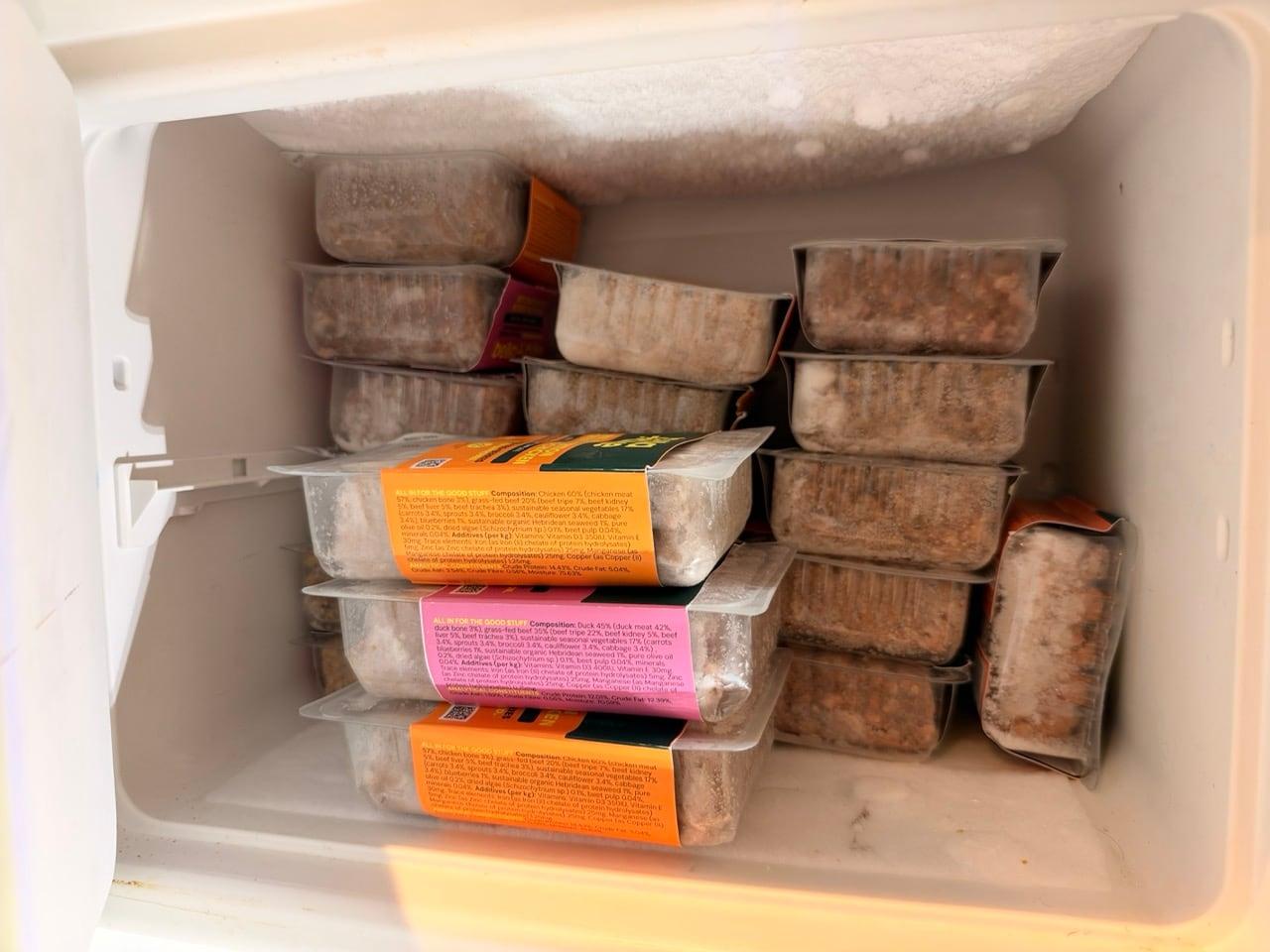
Switching from kibble to raw: a simple 7-day plan
Switching your dog from kibble to raw usually means a gradual change over about a week, swapping a bit more of each meal for raw every couple of days. Below is a simple 7-day plan, the straight switch some owners use instead, what to expect in the first few weeks, and the signs that mean it’s time to slow down and call your vet.
Before you start
Before you change anything, talk to your vet, work out a daily amount, and sort out freezer space and a place to defrost. The Royal Kennel Club’s advice on raw feeding is simple: speak to your vet first. That matters most for puppies, older dogs, pregnant or nursing dogs and any dog with a health condition.
It’s also worth deciding whether raw is right for your household at all. Raw meat can carry harmful bacteria: in a Food Standards Agency survey of 380 samples (277 dog, 103 cat) bought between March 2023 to February 2024, 35% contained pathogens. If you have young children, or anyone at home who is elderly, pregnant or has a weakened immune system, read our guide on whether raw dog food is safe first. Our raw vs kibble comparison sets out the trade-offs honestly, including cost and convenience.
Once you’ve decided to go ahead, get three things ready:
- A daily amount. As a guide, adult dogs eat 2% to 3% of their body weight in raw food a day. Our raw feeding calculator works it out in grams, and our guide to how much raw food to feed explains how to fine-tune it.
- Freezer space. Frozen raw food takes more room than a bag of kibble. Plan for it before the first box arrives.
- A defrosting habit. Raw food is defrosted in the fridge, which takes time. Bella & Duke, for example, says its food takes around 24 hours on the bottom shelf. Our guide to storing and defrosting raw food has the detail.
A simple 7-day switching plan
A commonly used approach is to replace a bigger share of each meal with raw every couple of days, so your dog is fully on raw by the end of the first week. It isn’t a medical protocol, just a sensible pace that gives your dog’s stomach time to adjust and gives you time to notice if something isn’t right.
| When | Kibble (old food) | Raw (new food) |
|---|---|---|
| Days 1–2 | Three-quarters | One-quarter |
| Days 3–4 | Half | Half |
| Days 5–6 | One-quarter | Three-quarters |
| Day 7 | None | All raw |
A few practical points that make the plan easier to follow:
- Keep the total the same. The proportions are of the daily amount, so as raw goes up, kibble comes down. Remember that kibble and raw weigh very differently for the same amount of food, so work out each part from its own feeding guide rather than swapping gram for gram.
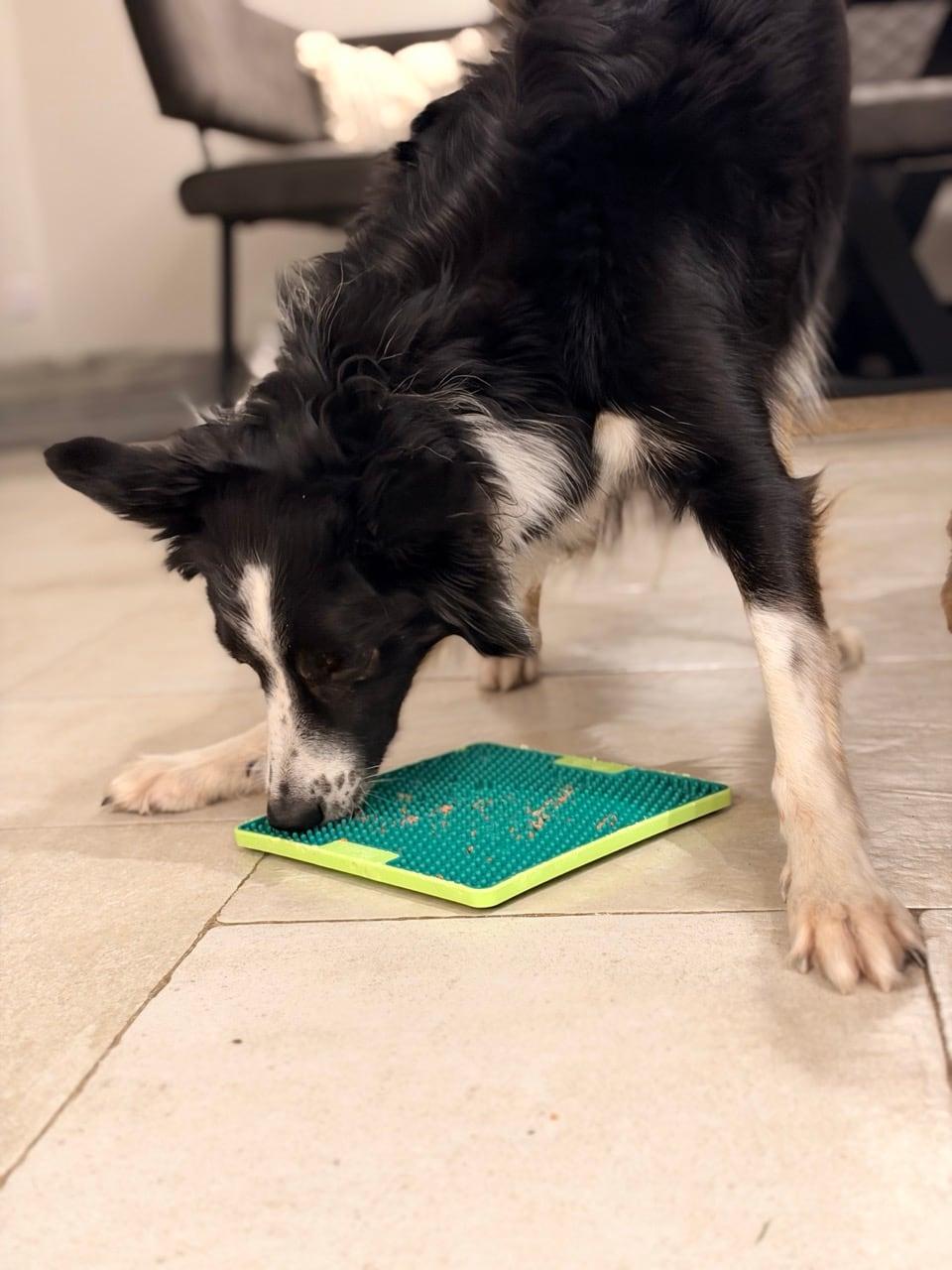
- Mixed bowl or separate meals. Many owners mix kibble and raw in the same bowl during the switch. Others prefer to keep them apart, for example kibble in the morning and raw in the evening. Either is common; if your dog seems unsettled, ask your vet which they’d suggest.
- Start simple. Many owners begin with a single, plain recipe and only add variety once the dog has settled.
- Hold treats steady. Avoid introducing lots of new treats and chews in the same week, so that if your dog’s stomach is upset you know what to look at.
- Go at your dog’s pace. If things look unsettled at any step, stay there for a few more days, or go back a step, before moving on. Taking two weeks rather than one is perfectly reasonable.
The alternative: a straight switch
Some owners skip the gradual plan and move straight from kibble to raw from one meal to the next. It’s simpler, and some feel it suits a healthy adult dog with a sturdy stomach. It is not the cautious option, though, and it isn’t the one to choose for a puppy, an older dog or a dog with a sensitive stomach or health condition without talking to your vet first.
| Approach | What it offers | What to watch |
|---|---|---|
| Gradual switch | Time for your dog’s stomach to adjust, an early warning if something isn’t right, and a use for the kibble you already have. | A week or two of measuring two foods. You need to work out each part from its own feeding guide. |
| Straight switch | Simplicity: one food from the first raw meal. Some owners feel it suits a healthy adult dog. | Less margin if your dog’s stomach reacts. Not one to choose for a puppy, older dog or sensitive dog without your vet’s input. |
Whichever way you go, the warning signs below are the same, and so is the rule: if you’re worried, speak to your vet.
What to expect in the first few weeks
Expect your dog’s poo to change. Stools often look different when a dog changes diet, in size, firmness or colour, and it can take a little while to settle. Beyond that, every dog is different, so watch rather than assume.
- Stools. A change is common and is usually what owners notice first. A short spell of slightly loose stools during a diet change isn’t unusual, but it shouldn’t go on (see the next section).
- Appetite. Some dogs dive straight in. Others are cautious with a new texture or temperature for a few meals.
- Weight. Weigh your dog every couple of weeks and adjust the portion in small steps, as our feeding guide explains.
- Water. Keep fresh water down as always, and mention any big change in drinking to your vet.
When to slow down and see your vet
Slow the switch down, or go back a step, if your dog’s stomach seems unsettled. Speak to your vet if any of the following happen, and go straight away if your dog seems very unwell:
Puppies and small dogs can go downhill faster than larger adult dogs when they’re unwell, so don’t wait it out with them. And if a problem keeps coming back once your dog is fully on raw, that’s a conversation for your vet rather than something to fix by changing food again and again.
Puppies, older dogs and sensitive stomachs
Take more care, and involve your vet from the start, if you’re switching a puppy, an older dog or a dog with a sensitive stomach or health condition. These are the dogs for whom the slower, gradual route makes most sense.
- Puppies need a puppy-specific complete food, fed in different amounts and more often than adults. They can also become unwell more quickly. Our guide to raw feeding puppies explains what changes.
- Older dogs can be more set in their ways and may have health conditions that affect what they should eat. A check-up before you switch is sensible, and our guide to raw feeding senior dogs covers the questions to ask.
- Dogs with sensitive stomachs often do better with a slower switch, a single simple recipe to start with, and no new treats until they’ve settled.
- Dogs on medication or a prescription diet shouldn’t be switched without your vet’s agreement. A prescription diet is there for a reason.
If your vet advises against raw for your dog, there are other fresh and complete foods to consider, and a good dry food remains a perfectly sound choice for many dogs.
Handling raw food safely from day one
Treat raw dog food the way you’d treat raw meat for your own dinner: keep it cold, keep it separate and clean up properly. The Food Standards Agency survey found 21% of samples contained Salmonella, so the hygiene habits you set in the first week are worth keeping for good.
- Defrost in the fridge, covered, on the bottom shelf, away from food for people.
- Wash your hands with soap and hot water after handling raw food, bowls or poo.
- Wash bowls after every meal, and clean surfaces and utensils after use.
- Pick up leftovers rather than leaving them out.
- Keep young children away from the bowl and the prep area.
Our guide to raw dog food safety covers this in more depth, including who should think twice about raw feeding at home.
Our switch
If you decide to try raw, our calculator gives you a starting amount, and the offer below takes the edge off the first few boxes while you see how your dog gets on.
A starting point, not veterinary advice. Ask your vet before changing your dog's diet, especially for puppies, pregnant or nursing dogs, or dogs with a health condition.
Frequently asked questions
How long does it take to switch a dog from kibble to raw?
A gradual switch over about a week is a commonly used approach, moving from mostly kibble to all raw in steps. Some dogs need longer, and some owners switch straight over. There is no single right answer, so ask your vet what suits your dog.
Can I switch my dog to raw food straight away?
Some owners do switch from one meal to the next. It can suit a healthy adult dog with a robust stomach, but a gradual change gives you more chance to spot a problem early. Speak to your vet first, especially for puppies, older dogs or dogs with a health condition.
Is it normal for my dog’s poo to change after switching to raw?
Stools often change when a dog changes diet. Many owners notice a difference in size, firmness or colour. Speak to your vet if your dog has diarrhoea lasting more than a day or two, or any blood in their stool.
Should I mix kibble and raw in the same bowl?
Many owners mix them during a gradual switch. Others prefer to keep kibble and raw in separate meals. There is no single rule; if your dog seems unsettled, ask your vet which approach they suggest.
When should I see a vet during the switch?
Speak to your vet if your dog vomits repeatedly, has diarrhoea lasting more than a day or two, seems lethargic, stops eating or you see blood in their stool. Go straight away if your dog seems very unwell.
Sources
- Royal Kennel Club: Is raw food good for dogs?
- Food Standards Agency: survey of contamination in raw dog and cat food on sale in the UK
- GOV.UK: Good hygiene when handling raw pet food emphasised in FSA survey (25 February 2026)
- Bella & Duke help: How to defrost your food
Figures last checked 15 November 2026. If something has changed, tell us and we will correct it.
Related reading
- Raw vs kibbleRaw food against dry kibble: cost, storage, handling, what vets say and what changed when our two dogs moved from kibble to raw.
- How much to feedHow much raw food a dog needs: the 2–3% of body weight guide, adjusting for activity and weight, splitting meals and when to ask your vet.
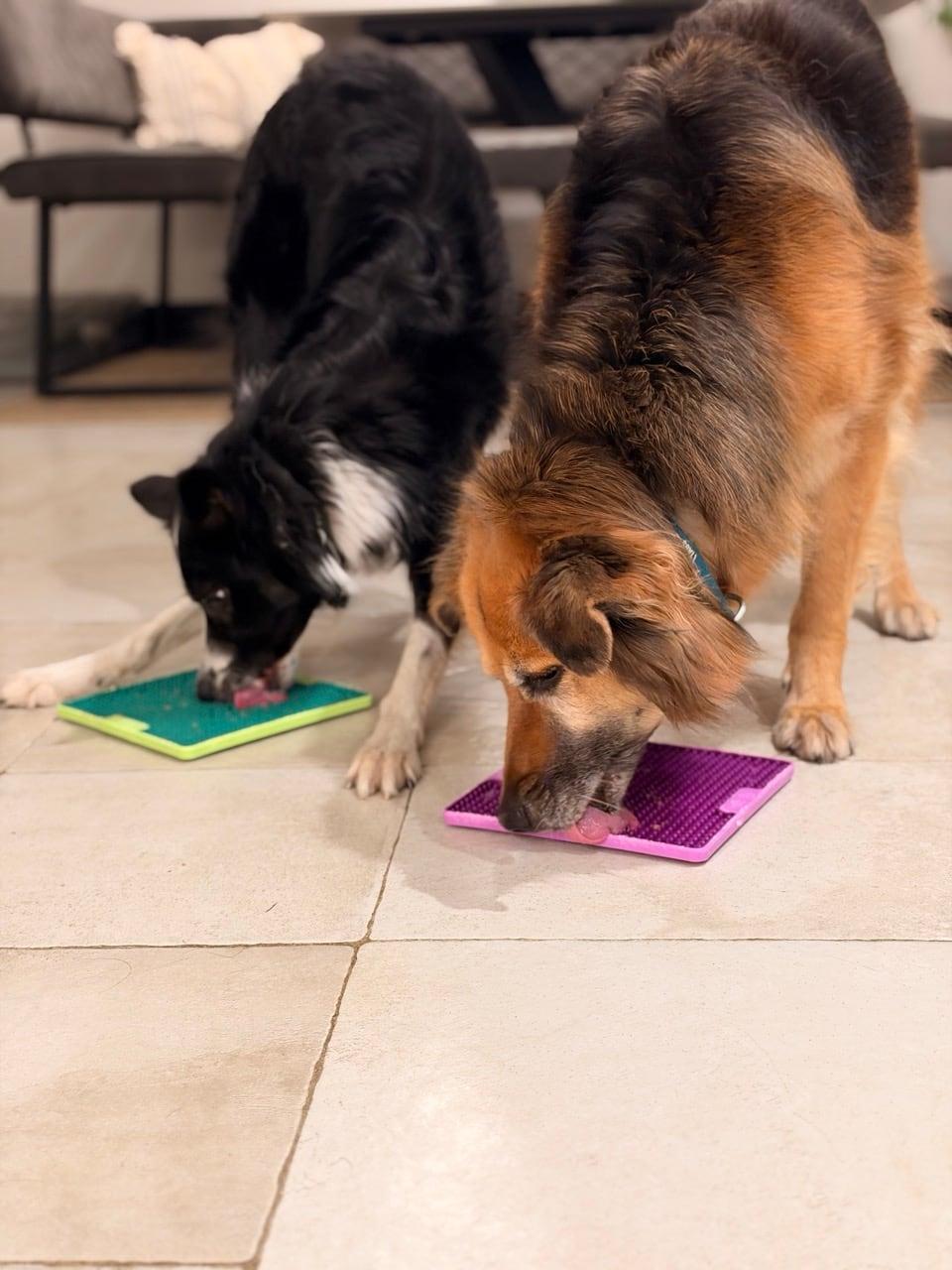
- Is raw safe?The honest safety picture on raw dog food: the FSA found harmful bacteria in 35% of samples, what vets say, and the handling steps that reduce the risk.
- Storage and defrostingHow to store and defrost raw dog food: freezer space, defrosting in the fridge, how long it keeps and the kitchen hygiene that matters.